

Subscription Economy: The Double-Edged Sword
The subscription economy: A $1.5T industry offering convenience with hidden costs and limited ownership.(feat: black mirror)
⚖️ Subscription Economy: The Double-Edged Sword
🏷 Yesterday’s Black Mirror Episode
Yesterday, I watched the Black Mirror episode “Common People” on Netflix. It depicted a storyline about a wife suffering from a brain tumor who undergoes surgery using new technology.
The episode showcases the protagonist’s helplessness as subscription costs steadily rise after backing up his wife’s brain information through a subscription-based service.
Through this narrative, it powerfully illustrates the extreme negative consequences of the subscription economy.
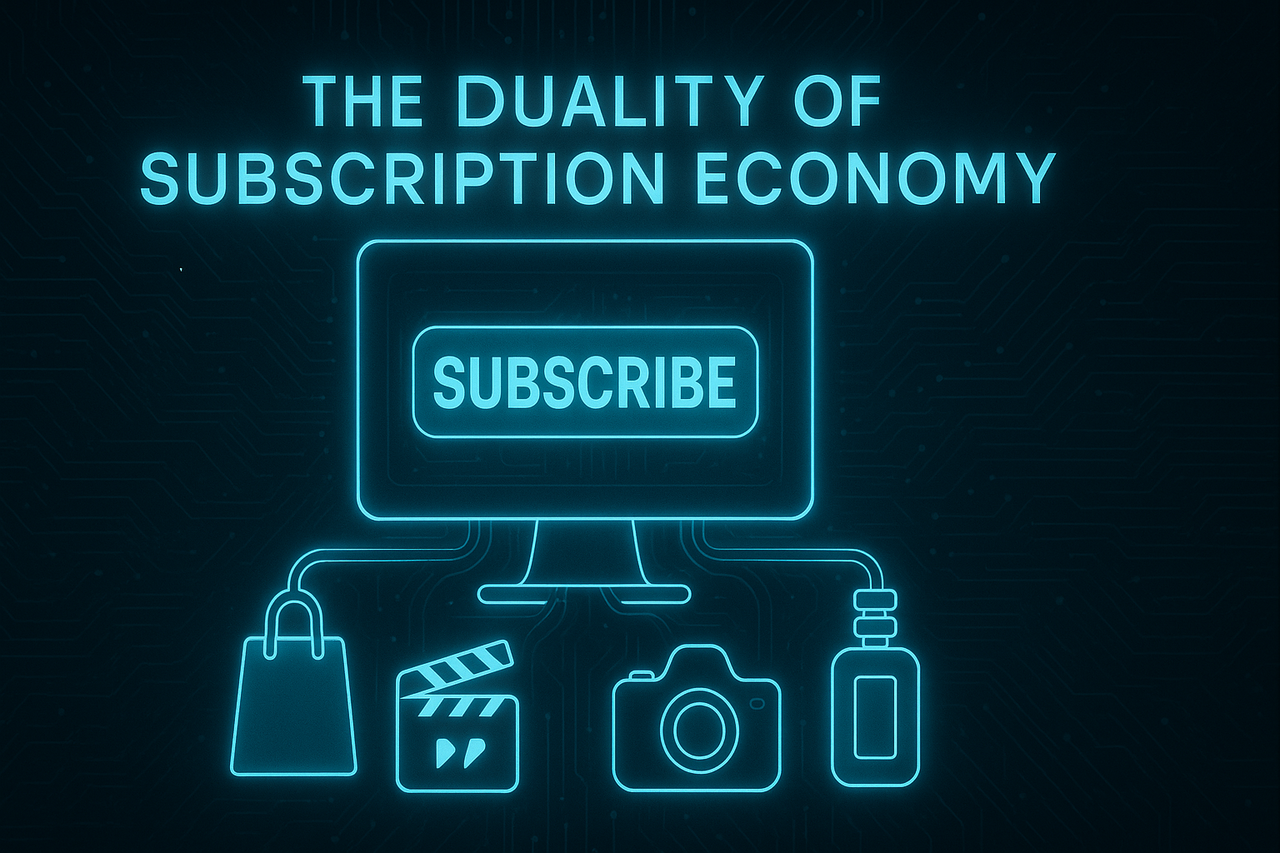
This episode prompted me to reconsider my generally favorable attitude toward subscription models as a developer and made me curious about how many subscription services I’m currently using.
🏷 The Subscription Services Targeting My Wallet
Currently, I subscribe to the following services:
- Streaming Services: Netflix, Disney+, Hulu, HBO Max, Amazon Prime Video, YouTube Premium (approximately $50 per month)
- Productivity Tools: Notion and other apps (approximately $60 per month)
- Development Related: GitHub, OpenAI, Claude, Gemini, AWS, etc. (approximately $100 per month)
In total, I’m spending around $210 monthly on subscription services. What’s surprising is that this number continues to grow, especially as I subscribe to more services to access AI and new development technologies.
🏷 Are Subscriptions an Investment or a Waste?
Previously, I hesitated to pay for services, only subscribing to one or two after careful consideration. However, I changed my mindset, believing that as a developer, this attitude could lead to falling behind.
If spending $10–20 allows me to access new technology and broaden my perspective, I believe it’s a worthwhile investment. I think it’s important to quickly experience new technologies and understand trends, even if it costs money.
I particularly believe that job seekers and beginners would benefit from rational yet proactive consumption. That’s why my approach now is to subscribe to services I’m interested in, try them for at least a month, and cancel if they’re not useful.
However, seeing my subscription fees approaching $210 monthly makes me reconsider whether all these services are truly necessary (I realize there’s some contradiction in what I’m saying here).
🏷 We Were Already Living in a “Subscription Society”
In reality, I think we’ve been engaged in various forms of monthly subscriptions long before the term “subscription model” became popular. Phone bills, monthly utilities, various taxes — all these fixed monthly payments could be considered subscriptions in a way.
From another perspective, companies pay us a “monthly subscription fee” (salary).
So why is there particularly strong resistance to IT-related subscription models?
🏷 The Dark Side of the Subscription Economy
Behind the rapid growth of the subscription economy lies the significant side effect of user “subscription fatigue.” Companies’ marketing tactics are a major cause, especially in the IT industry, where they often attract users with initially low subscription fees and then implement unreasonable price increases under the pretext of system maintenance once the market stabilizes.
For example, after YouTube increased the price of “YouTube Premium” by 16.7% at once, many OTT providers followed suit with price increases. While platform companies explain this as an unavoidable choice due to economic factors, consumers often view it as typical platform marketing tactics.
The main disadvantages of the subscription economy are that fixed expenses accumulate to take up a large portion of spending, and consumers don’t have ownership. There’s also the problem that consumers have no choice if sellers decide to terminate services, raise prices, or lower quality. As the Black Mirror episode shows, I think consumers become more vulnerable the more dependent they become on services. I believe this will inevitably become more prevalent in the future.
🏷 The Growth and Outlook of the Subscription Economy
Despite these concerns, the subscription economy is growing rapidly. According to a report by UBS, the global subscription market is projected to reach $1.5 trillion by 2025, with the U.S. subscription market expected to grow to $500 billion by the same year. This suggests that the benefits offered by the subscription model still outweigh the drawbacks for both consumers and businesses.
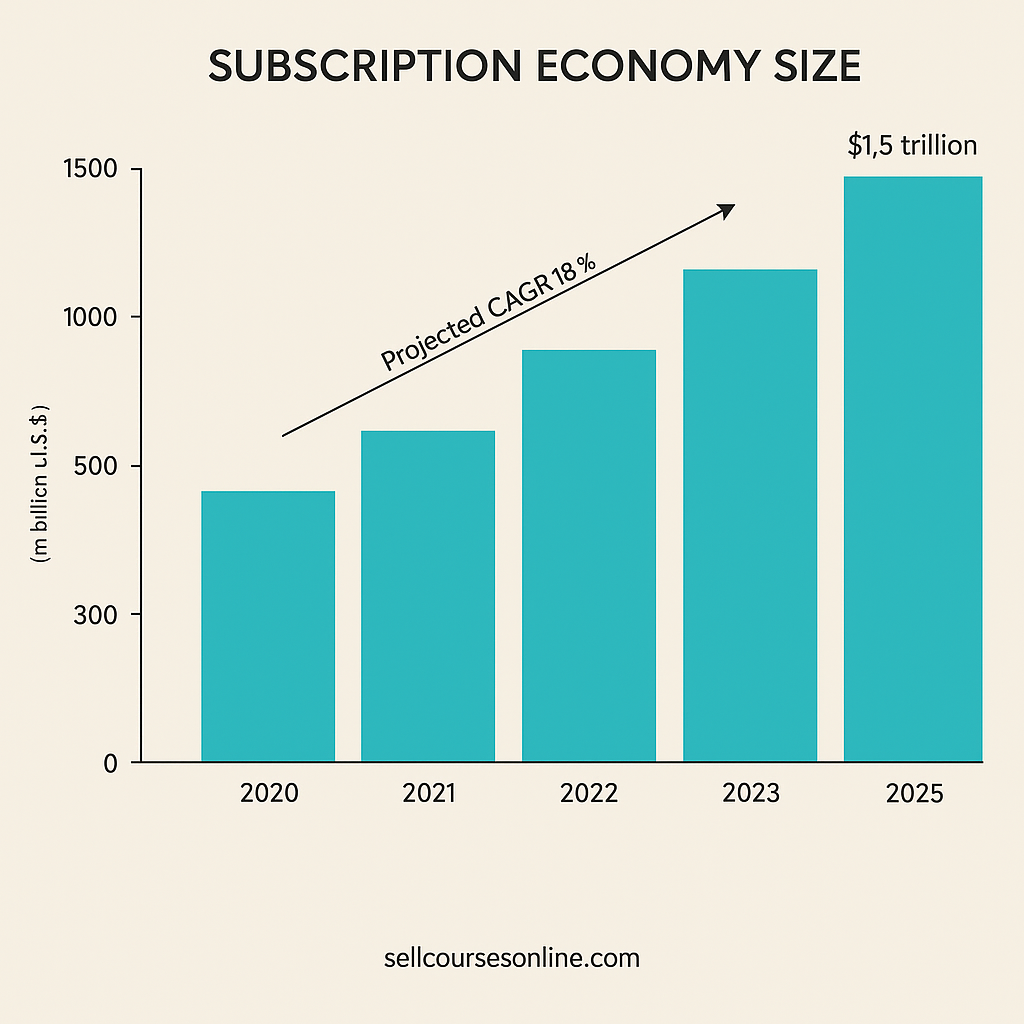
The subscription economy is garnering attention as an innovative service that will create enormous economic value by changing the service usage paradigm. Particularly with Gen Z and Millennials emerging as the main consumer base, the subscription economy is likely to spread further.
The benefits of the subscription economy can be explained by the economic theory of “search costs” and the psychological theory of “need for cognitive closure.” Search costs refer to the time and effort spent finding desired products or services, and subscription services significantly reduce these costs.
The need for cognitive closure refers to the tendency to want to quickly end the decision-making process, and subscription services satisfy this need, driving further growth.
🏷 A Developer’s Dilemma
As a SaaS developer, I experience the duality of the subscription model daily. On one hand, the stable revenue stream provided by the subscription model is essential for continuous product development and innovation. Having predictable cash flow allows for long-term development planning and improvement of user experience.
Adobe’s case study demonstrates this well, showing dramatic revenue growth after transitioning to a subscription model from 2013 to 2019.
The subscription model also offers clear benefits to users: lower initial purchase costs reducing barriers to entry, the ability to scale according to needs, and automatic software updates and security patches.
However, the structural problems of the subscription model are also clear. The pattern of starting with low prices and then increasing them once a certain level of users is secured is repeated, and users become vulnerable to price increases the more they depend on the service.
Another dilemma developers face is choosing between various pricing models. Flat-rate pricing is simple but difficult to reflect various needs; usage-based models are fair but make revenue prediction difficult; tiered models can accommodate different customer segments but may become structurally complex. Ultimately, finding balance between users and developers is key, but this balance point seems very difficult to find.
🏷 Sustainable Subscription Economy
For the subscription economy to move in a sustainable and consumer-friendly direction, market competition must be promoted and reasonable pricing policies maintained. Transparent information provision, protection of consumer rights, and policies encouraging fair competition are essential for this.
Service providers need to focus on building long-term consumer trust rather than short-term revenue growth, and consumers need to determine which services they truly need and decisively cancel unnecessary subscriptions.
While these points may seem theoretical, I don’t see many better alternatives from my individual perspective.
🏷 Concluding Thoughts
It’s my first time writing such a post after watching a TV show, which speaks to how powerful the Black Mirror episode’s warning message about the extreme future of the subscription economy was.
We need to maintain vigilance about dependency and financial burden while enjoying the benefits of convenience and accessibility. We’ve entered an era requiring a balanced approach: enjoying the convenience of subscription services while always being careful about their costs and dependencies.
What do you think about the subscription economy? How many services do you subscribe to monthly?
I’d appreciate your various opinions in the comments about the balance you find between the value of convenience and ongoing expenses, or if you have experience as a subscription service provider, your perspective from that angle.
This essay was originally published on Medium and migrated to KanApp Blog.
Comments
Join the conversation
Sign in to leave a comment.
Comment login is being configured.
No comments yet.