

Turning client conversations into quote prep you can defend
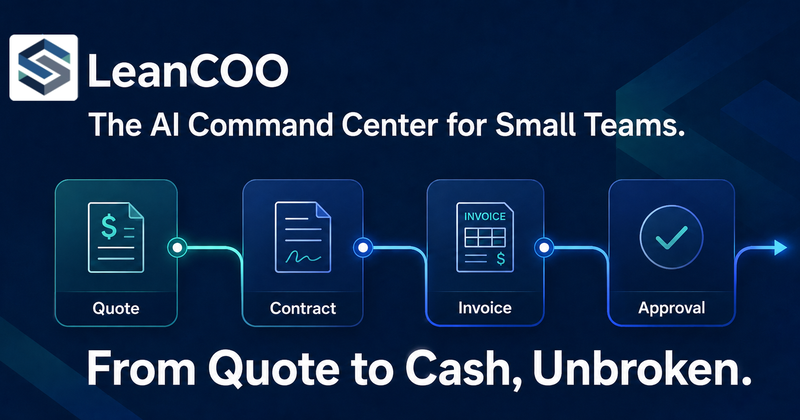
Most of the hard part of a deal happens before there is a contract, when the real information is scattered across calls, emails, and Teams threads. LeanCOO's new Pre-contract Workspace, built during OpenAI Build Week, pulls all of that into one structured brief where every claim is traceable to its source and nothing moves until a person approves it.
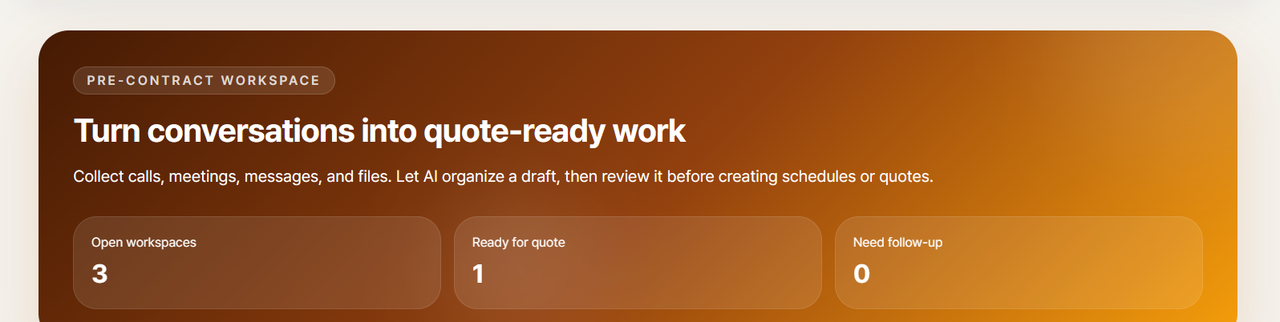
LeanCOO Pre-contract Workspace
Most of the hard part of a deal happens before there is a contract. A client explains what they want on a call. Someone follows up by email. A few requirements shift inside a Teams thread. A file gets shared and then buried. By the time you sit down to write the quote, the real information is spread across five places, and half of it lives in your head.
I built something for that during OpenAI Build Week, and I want to write down how I thought about it, because the interesting part was not the AI summary.
What I built
If you would rather see it than read about it, here is a short walkthrough of the workspace.
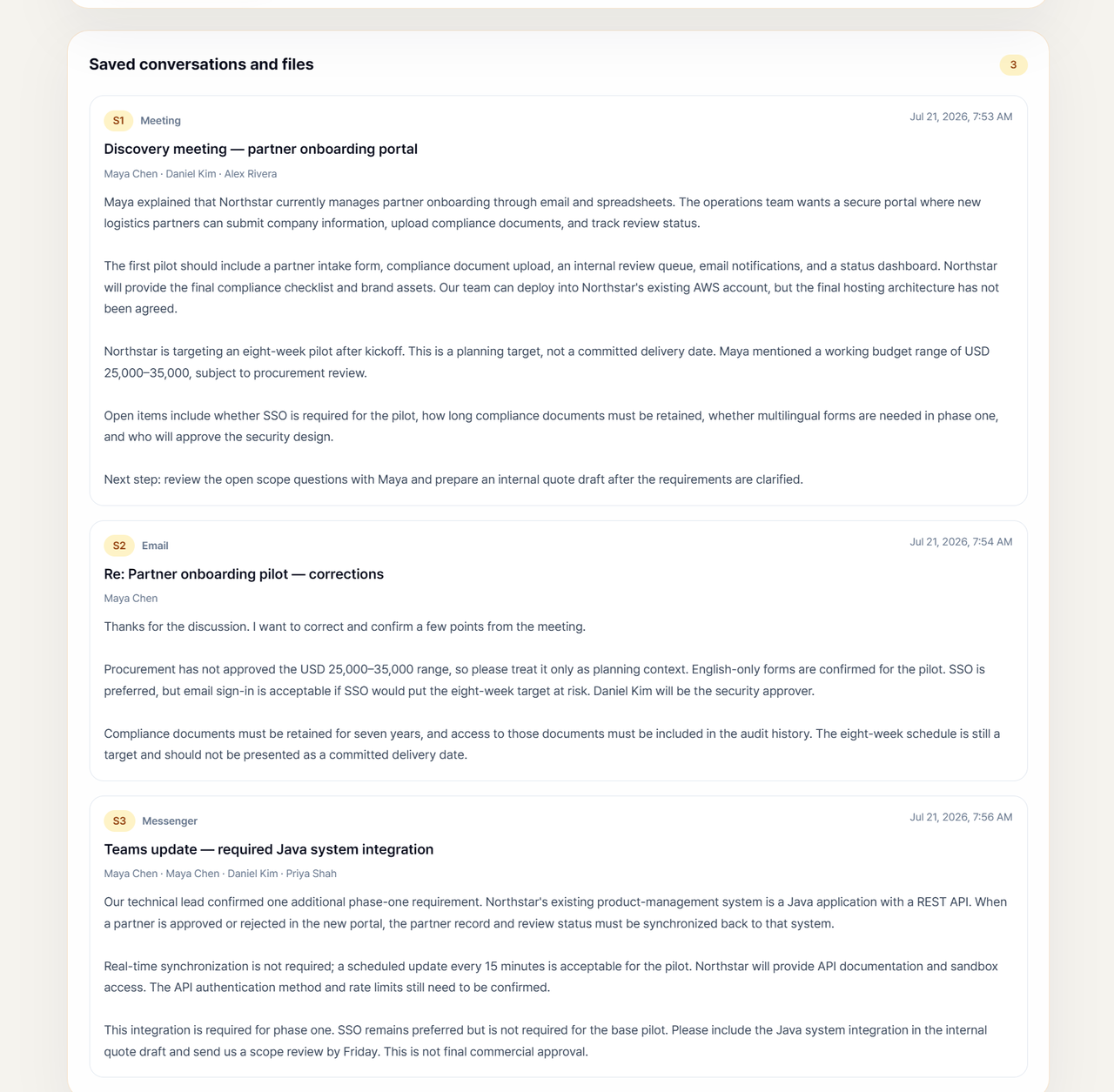
The raw material: calls, emails, and Teams threads, collected in one place.
I added a Pre-contract Workspace to LeanCOO. You bring in the raw material from those early exchanges, the calls, meetings, emails, Teams messages, and files, and it organizes them into one structured brief:
- what the client actually asked for, and the scope of the quote
- what is confirmed and what is still open
- risks, and the questions worth asking before you commit
- budget and timeline notes
- the owner, and the next action
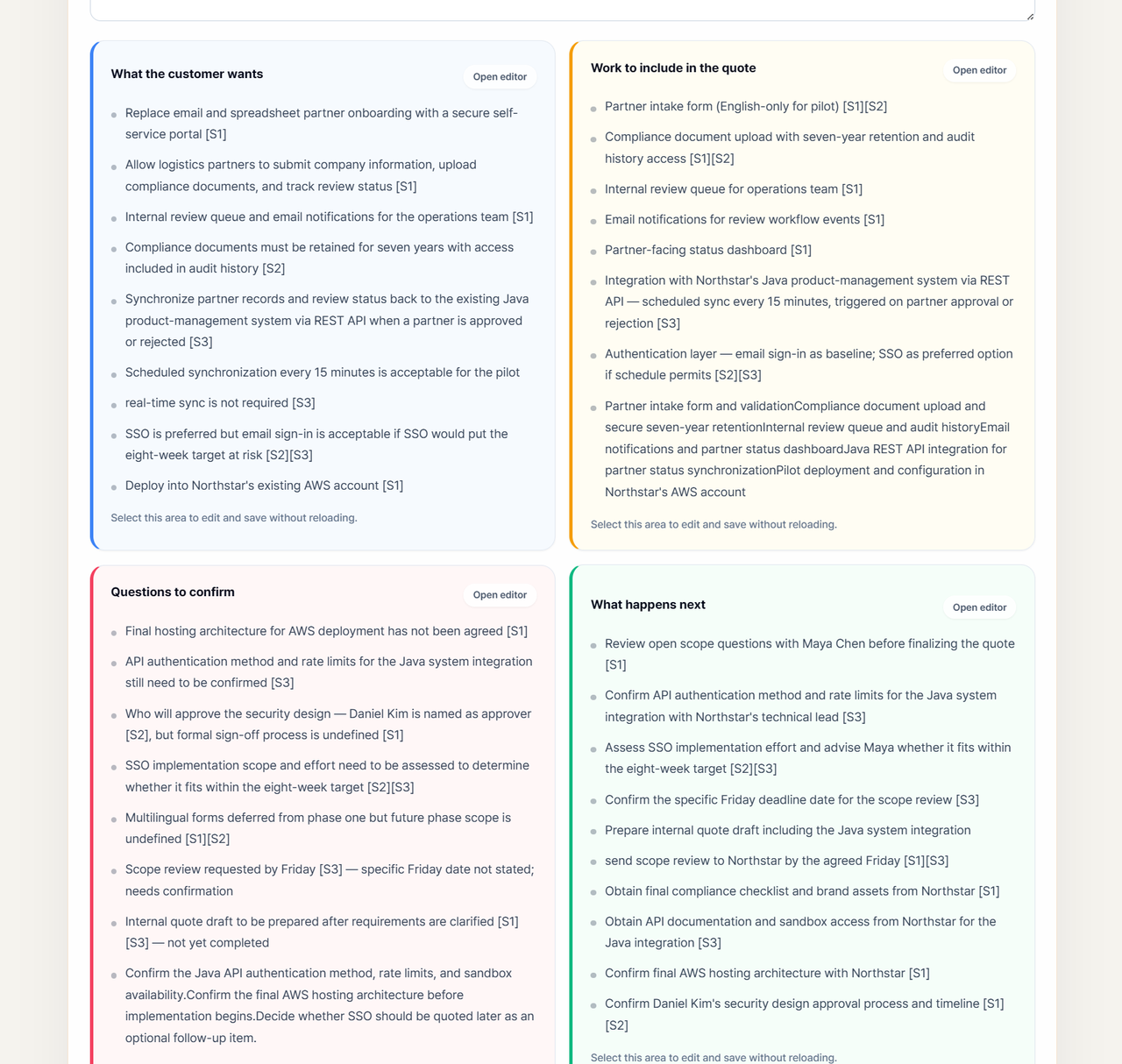
What the AI organizes it into: a structured brief, with every point checked against a source.
On its own, that is just another summarizer. Two decisions made it something I would actually trust.
Decision 1: every claim has to be traceable
The workspace tags each line the AI writes with a source marker, like [S1] or [S2], pointing back to the original message or file. If the AI cannot ground a statement, it does not get to make it. I added guards specifically to block invented facts and references to sources that do not exist. The reason is simple. A brief you cannot check is a brief you cannot put in front of a client.
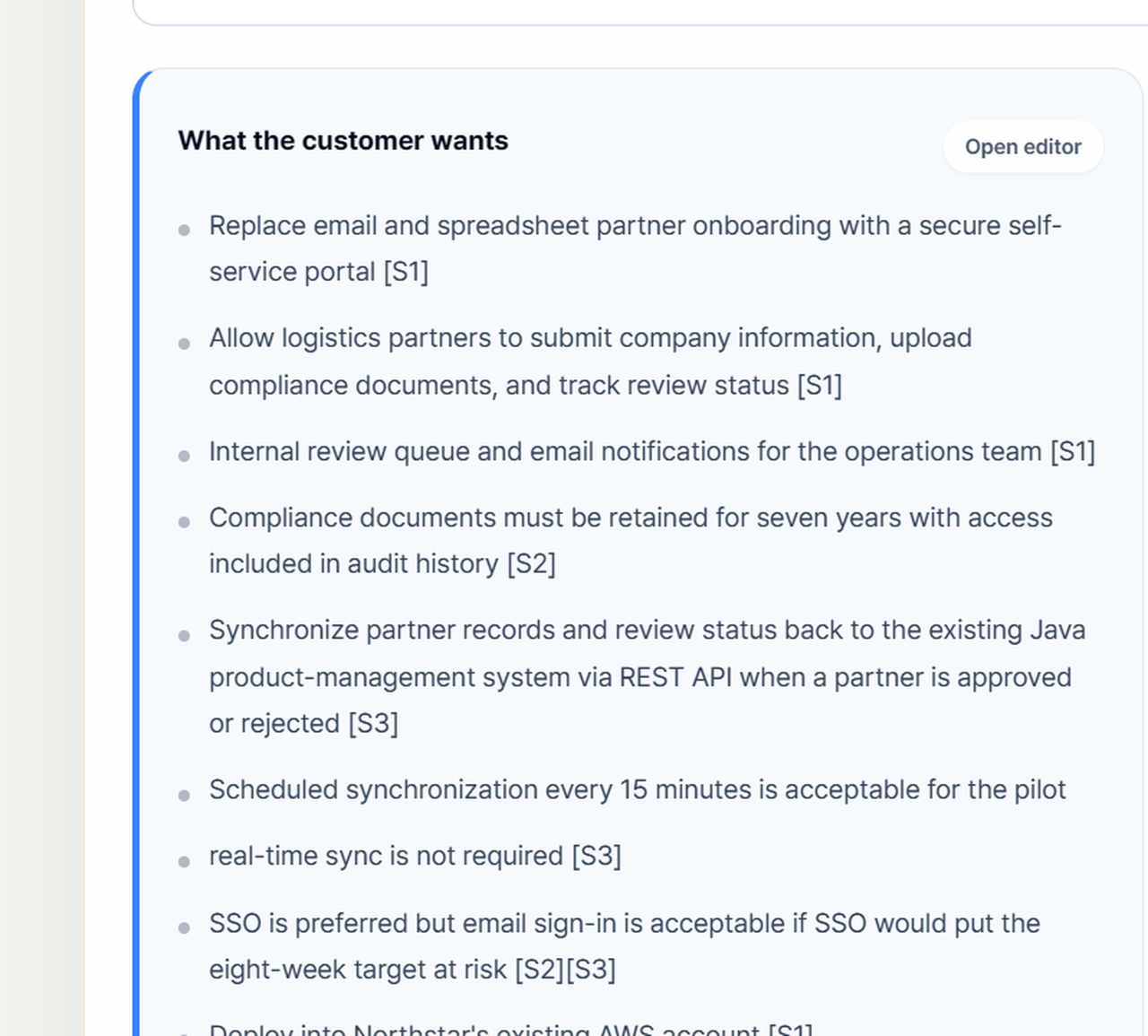
Every line carries a source marker like [S1] or [S2] that points back to the original message.
Decision 2: nothing moves without a person
The AI drafts and analyzes. It does not act. A person edits the brief, adjusts the numbers, and approves. Only the approved version flows into the calendar, the client record, the project, and the quote draft. The AI never contacts a client, and it never sends a quote by itself. This is the human-in-the-loop line that runs through all of LeanCOO, and the pre-contract stage is where it matters most, because this is where a wrong assumption turns into a mispriced deal.
A few smaller pieces I liked building:
- a version history that keeps the AI draft, the human edit, and the approved version separate
- editing the expected amount before approval
- splitting an approved amount across quote line items by difficulty and effort
- English, Korean, Japanese, German, and Latin American Spanish out of the box
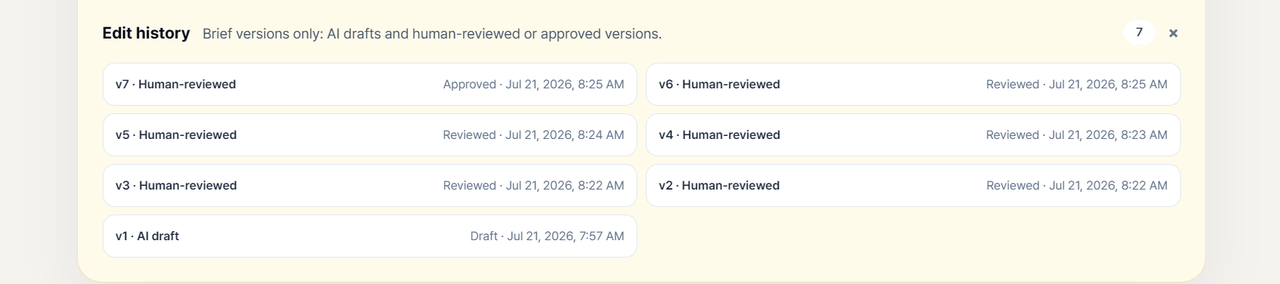
The AI draft, the human edit, and the approved version are kept as separate versions.
How Build Week fit in
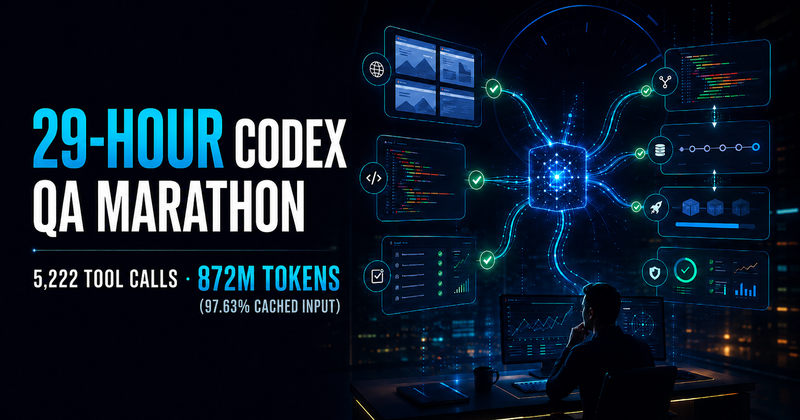
OpenAI Build Week asks you to build a working product with Codex and GPT-5.6, and to show the process and the decisions a person made along the way. I used Codex and GPT-5.6 to read through the existing codebase, work on the data model, the UI and server functions, tests, the multi-language support, deploy checks, and the submission write-up. The live product runs its AI on Amazon Bedrock, which is the setup LeanCOO already used. So the model that helped build this and the model that runs in production are not the same thing. I think that is worth being honest about. You can see the full submission, including the demo and the write-up, on Devpost.
What I take from it
The strongest idea here is not "AI summarizes your notes." Plenty of tools do that. It is turning a messy pile of client conversations into quote prep you can defend, while keeping the final call human. The AI removes the busywork of assembling the picture. The person keeps the judgment.
If you run quotes and contracts for clients, I am curious where your pre-contract information actually lives today, and what breaks when a deal moves faster than your notes. That is the problem I want LeanCOO to keep chipping at.
Comments
Join the conversation
Sign in to leave a comment.
Comment login is being configured.
No comments yet.