

Manus AI: From Code to Deployment in One Shot
Manus AI : No more copy-paste coding. This AI agent writes, tests, debugs, and ships your applications in one seamless flow. GAI
Following my previous review of Fellou, I want to introduce Manus, a similar General AI Agent (GAI) that’s been making significant strides. The platform has been commercially available for about three months since transitioning from beta. Initially, I brushed it off thinking “it’s just another beta from China,” but a recent revisit revealed substantial improvements that demand attention.
For those who couldn’t access Fellou due to invitation code requirements, this might be your alternative. Manus offers similar functionality and performance. I’ll admit though, China’s gradual emergence in the AI space is becoming somewhat concerning.
🏷 What is Manus?
Manus (https://manus.im/) officially describes itself as “a general AI agent that bridges minds and actions.” Currently operating as a full commercial service, it has garnered significant user interest and engagement.
Moving beyond simple chatbots, Manus positions itself as a true “digital worker.” The capability that stunned me most was its ability to handle everything from development to deployment in one seamless process, without requiring separate configurations or setups. This particular feature is what prompted me to write this review.
Developed by China’s Butterfly Effect (Monica) team, Manus AI is a General AI Agent. Note that it’s GAI (General AI), not AGI (Artificial General Intelligence) — this is how they officially refer to it, so I’ll use the same terminology.
Manus AI understands complex user requests, autonomously discovers optimal solutions, executes them, and delivers results in various formats as a general-purpose artificial intelligence agent.
I understand some readers might have reservations about Chinese-developed products. I certainly did initially. However, if you don’t read through to the end, you might regret missing out. The functionality is genuinely impressive, and I can’t help but think it’s quite remarkable.
✅ The Fundamental Difference: Execution Power
The core difference between Manus and existing AI services lies in their “execution capability.” Rather than simply providing text responses, multiple independent AI agents collaborate to actually complete real tasks.
When a user requests “Build me an online shopping site”:
Traditional AI: Provides code examples and explanations
Manus AI: Actually writes the code, tests it, and completes deployment
This is the essence of Manus AI. Of course, I don’t expect you to believe that Manus can handle absolutely everything based on this description alone. Theoretically, yes — but in practice, simple implementations are definitely achievable.
According to their documentation, Manus takes its name from the meaning of ‘mind (Mens)’ and ‘hand (Manus)’ — emphasizing not just understanding knowledge, but translating it into actual action to create concrete deliverables.
✅ Core Features and Capabilities
Complete Autonomy: Based on user instructions, it independently plans and executes tasks, searching for additional information and learning as needed to achieve objectives.
Diverse Task Processing: Capable of handling a wide range of tasks including market analysis, document processing, data analysis, website construction, and content generation.
Result Integration and Delivery: Integrates the work results from various agents to provide users with diverse deliverables including reports, charts, websites, spreadsheets, and notifications.
Deep Research Functionality: Derives professional insights through comprehensive market analysis and data processing.
Real-world Use Cases: Demonstrates various practical applications including resume reviews, real estate research, stock analysis, and travel guidebook creation that can be applied to actual work and daily life.
To put it simply, Manus operates like multiple AI agents working together as a team.
User Request: “Create a competitor analysis report”
- Planning Agent → Establishes overall task plan
- Research Agent → Gathers information from the web
- Analysis Agent → Analyzes data and derives insights
- Report Agent → Creates professional reports
- Visualization Agent → Generates charts and graphs
Each agent handles its specialized area, dividing work much like an actual team collaboration.
✅ Comparison with Existing AI Services
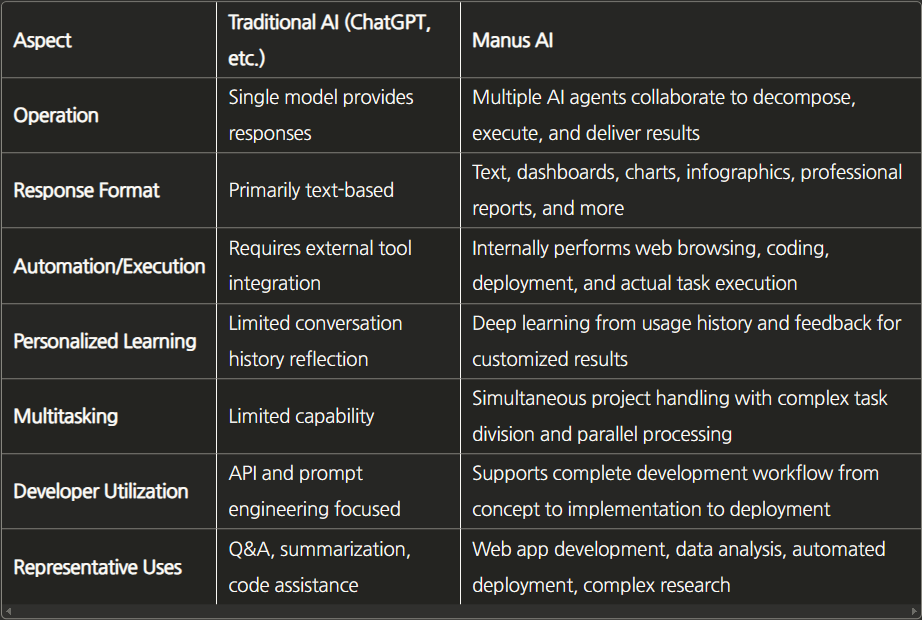
With the recent popularization of MCP, there’s been movement away from chat-only formats, but many AI services still face limitations when creating charts, images, or reports. In this context, handling everything through to deployment automatically was quite surprising.
Simple tasks really are handled completely autonomously.
✅ Execution vs. Conversation
Traditional AI:
- User: “Build me a TODO app”
- ChatGPT: “You can use the following React code…”
[Provides code block] - User: [Manual copy/paste → environment setup → debugging → deployment]
Manus AI:
- User: “Build me a TODO app”
- Manus: [Automatically creates React project → writes code → Sandbox testing → Sandbox deployment → temporary URL]
- Result: “Check it out at https://your-todo-app.manusvm.computer"
✅ GAIA Benchmark Performance
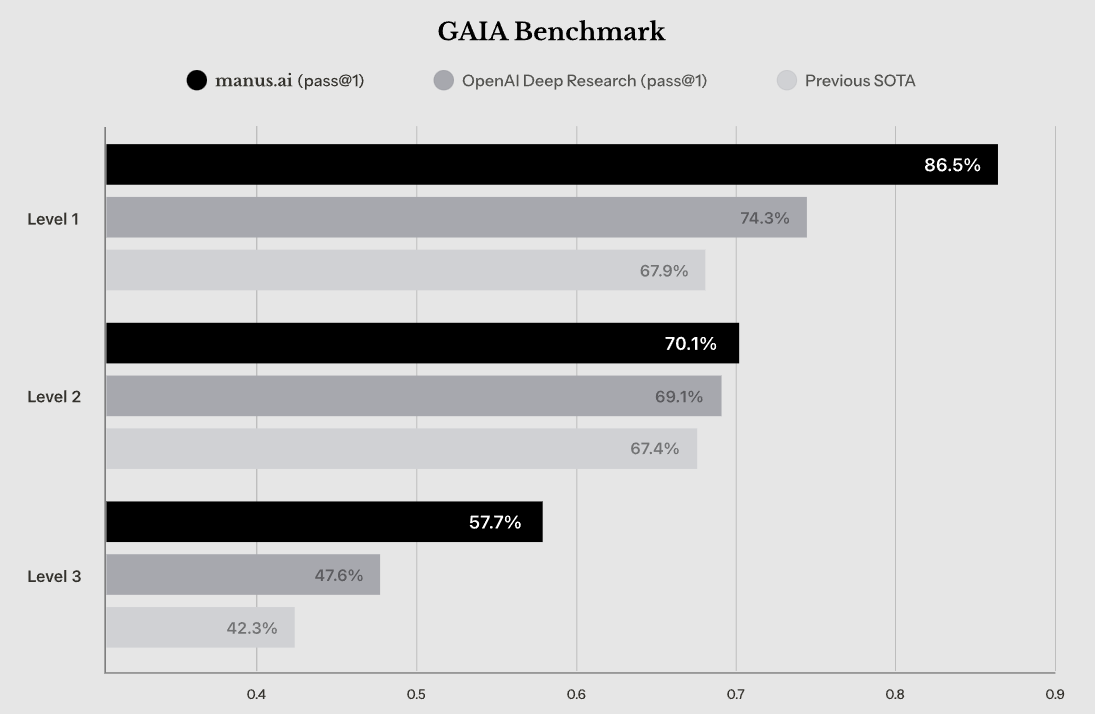
GAIA (General AI Assistant) is a benchmark that evaluates real-world task automation capabilities. According to Manus’s provided benchmarks, their performance is exceptional.
These results objectively demonstrate that Manus AI transcends simple conversational AI to become a system capable of autonomously completing complex real-world tasks. The significant gap particularly evident in Level 3 showcases Manus’s distinctive strength in multi-step reasoning and complex task processing that traditional AI systems struggle with.
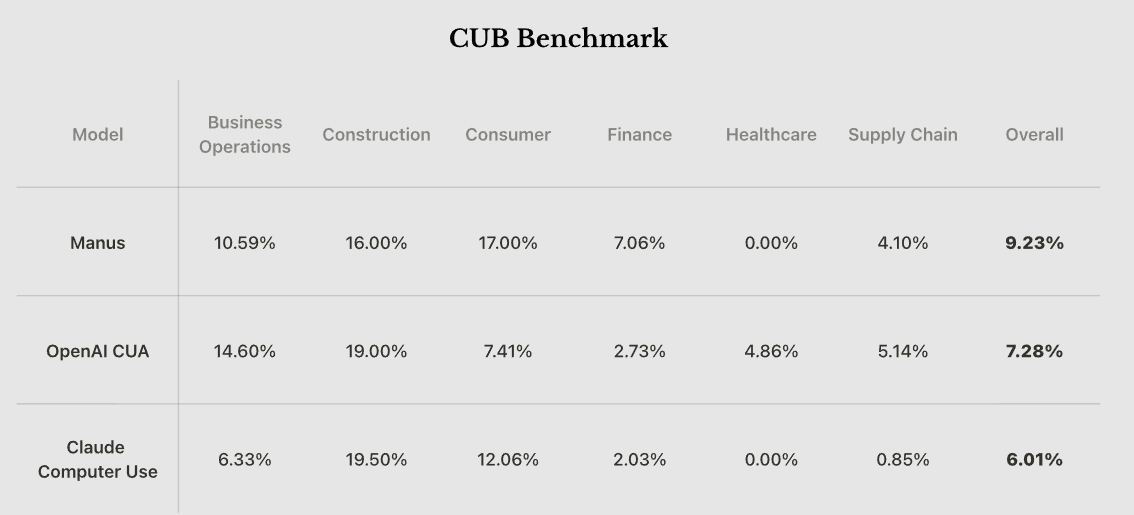
Looking at additional benchmarks provided by Manus, while it shows excellence in general business automation, there are still limitations in highly regulated specialized fields. Nevertheless, it appears to rank first in many categories.
✅ Task Replay Feature
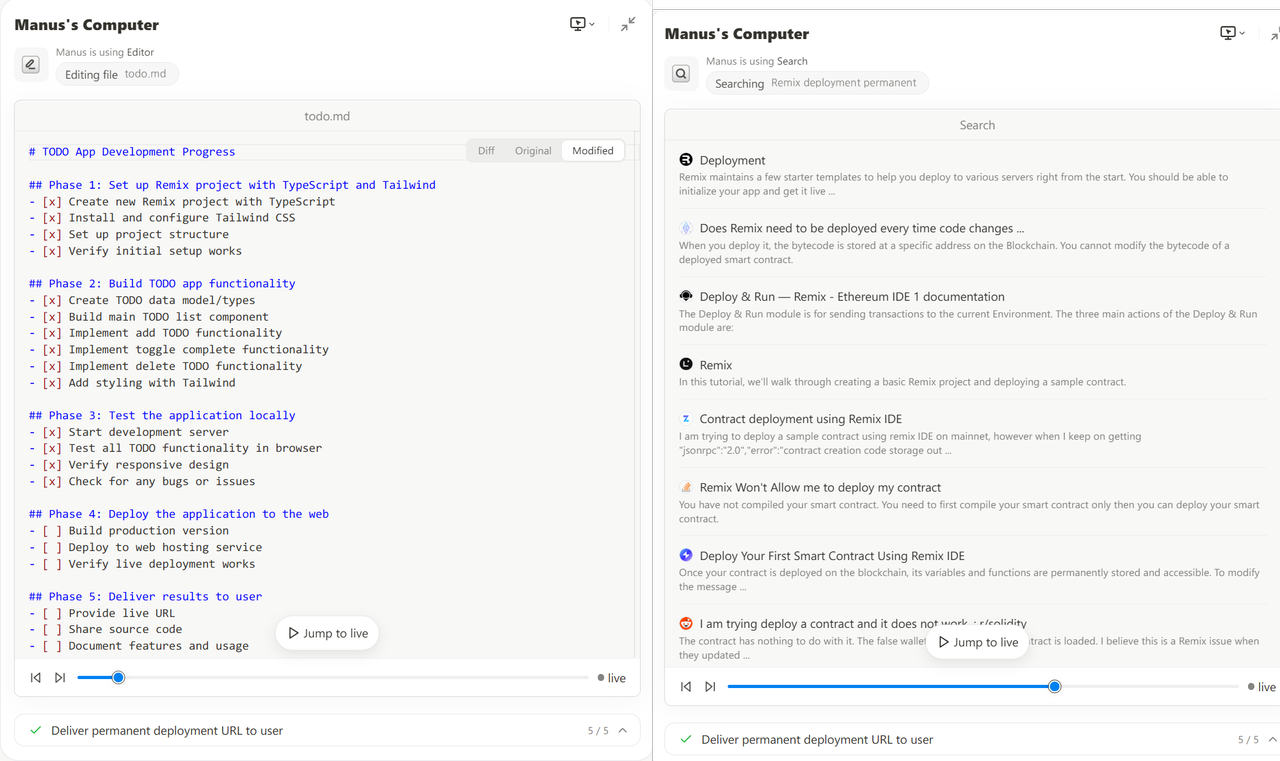
Uniquely, Manus doesn’t show the work process through log files or progress indicators, but rather provides it in an organized replay format. This allows intuitive visualization of what work was performed and where.
🏷 Hands-on Test: Deploying a TODO App
I decided to directly test building and deploying a commonly used TODO app. My requirements were to create a TODO app using Remix + TypeScript + Tailwind, deploy it, and make the actual results viewable on the web.
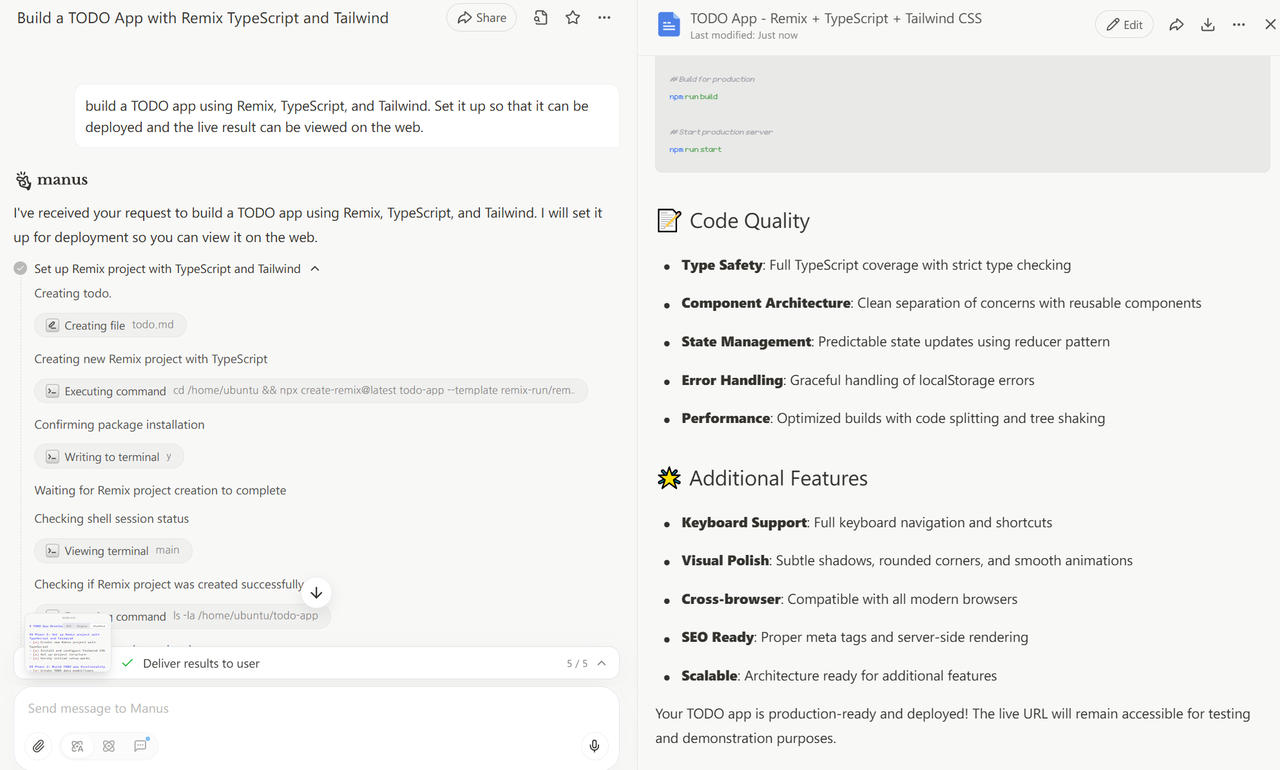
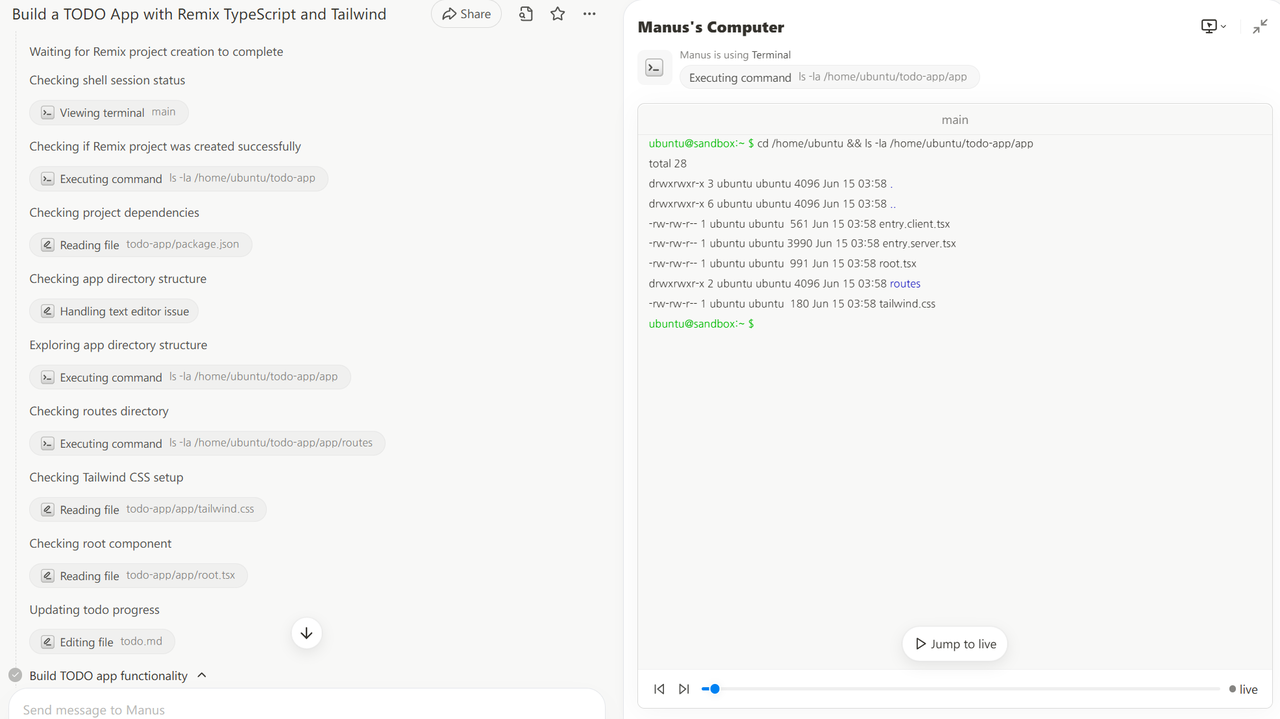
The process of creating the TODO app was fascinating to observe. What’s particularly notable is watching it directly execute shell commands within the Ubuntu sandbox environment. This means it performs tasks like creating or modifying files based on requests, building applications, and running them within this virtual environment to generate deliverables that can be viewed on the web. Awesome!!
In other words, it configures individual virtual servers where development-related files are set up and executed. This differs from traditional approaches using GitHub or other servers. The impressive aspect was enabling fast processing speeds and immediate result visualization.
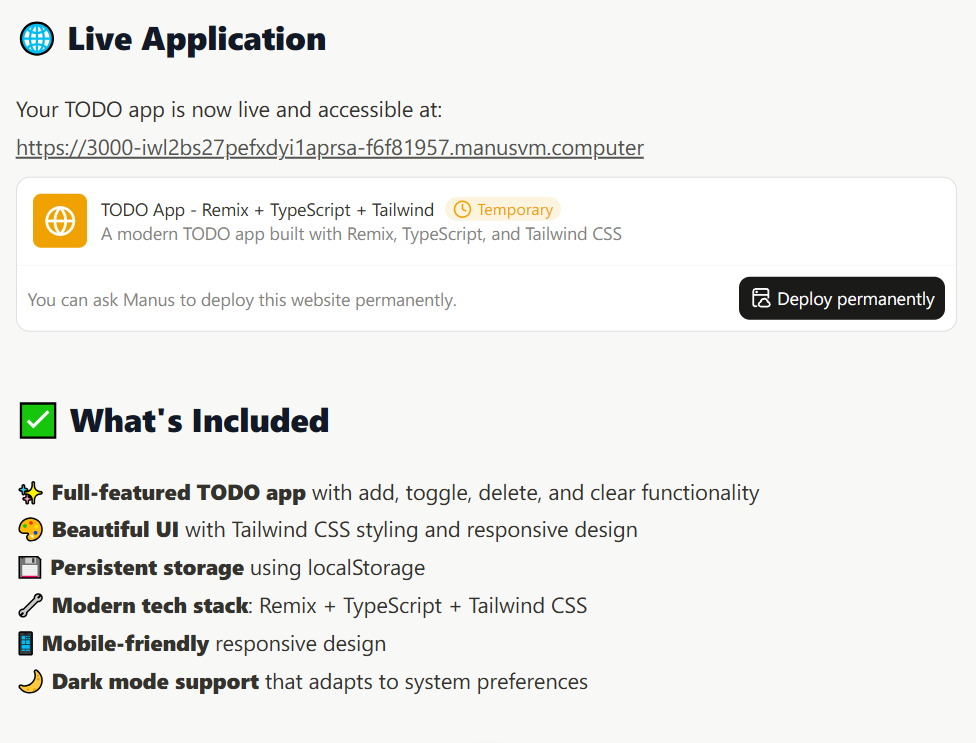
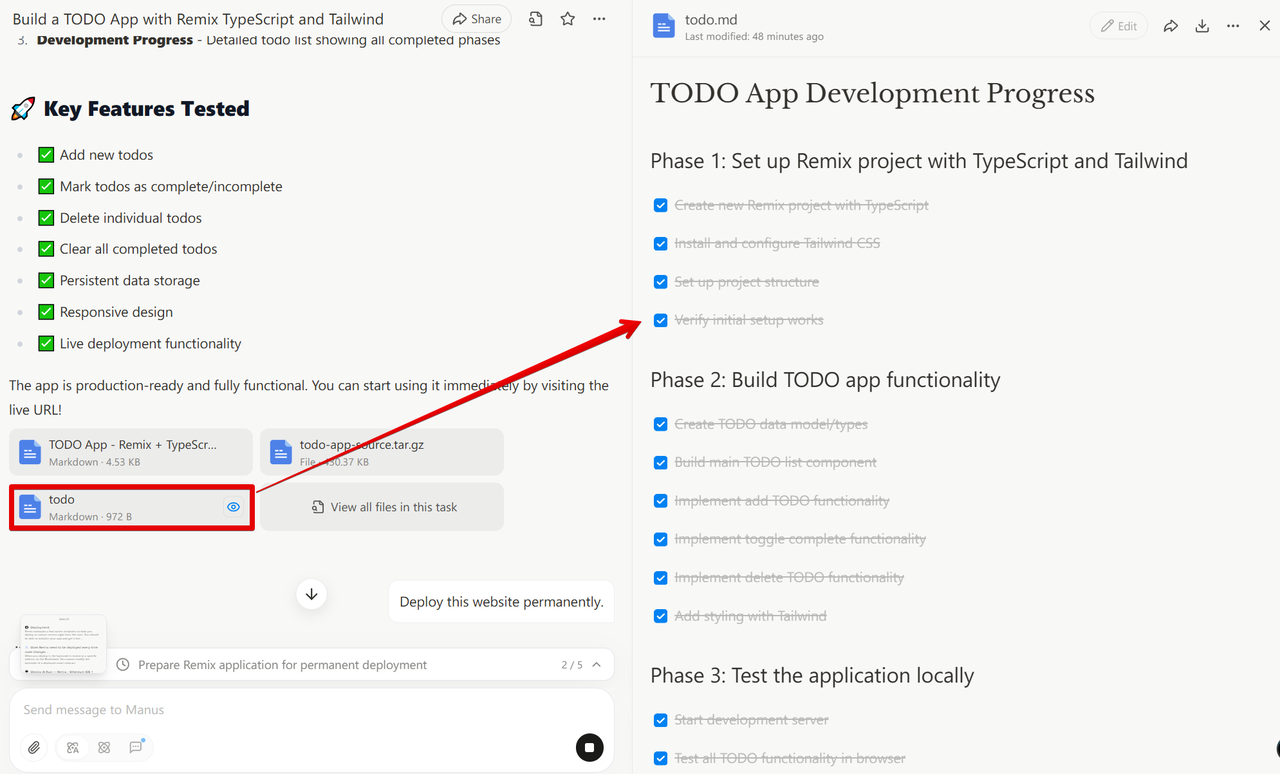
The deployment took roughly 3–4 minutes total. Since it was a simple app, the configuration time was manageable. It set up web accessibility and even provided source code downloads and todo.md documentation after completion. Wow~~ This is pretty remarkable..
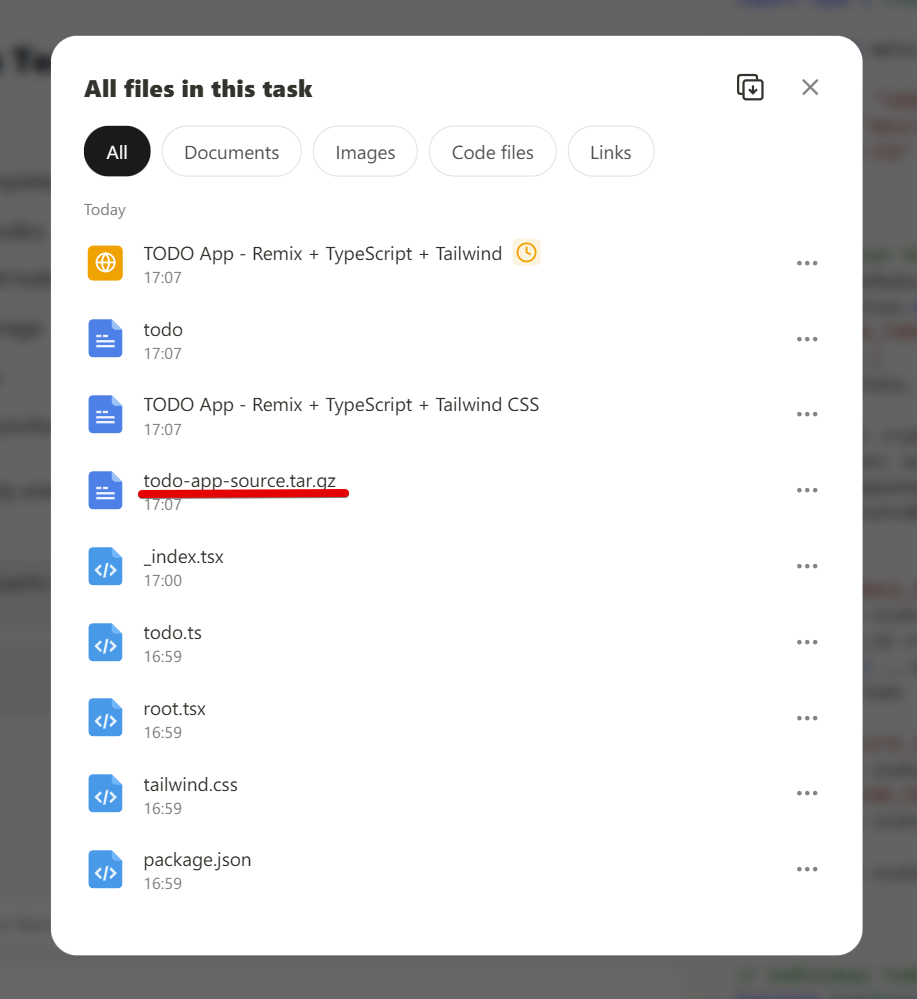
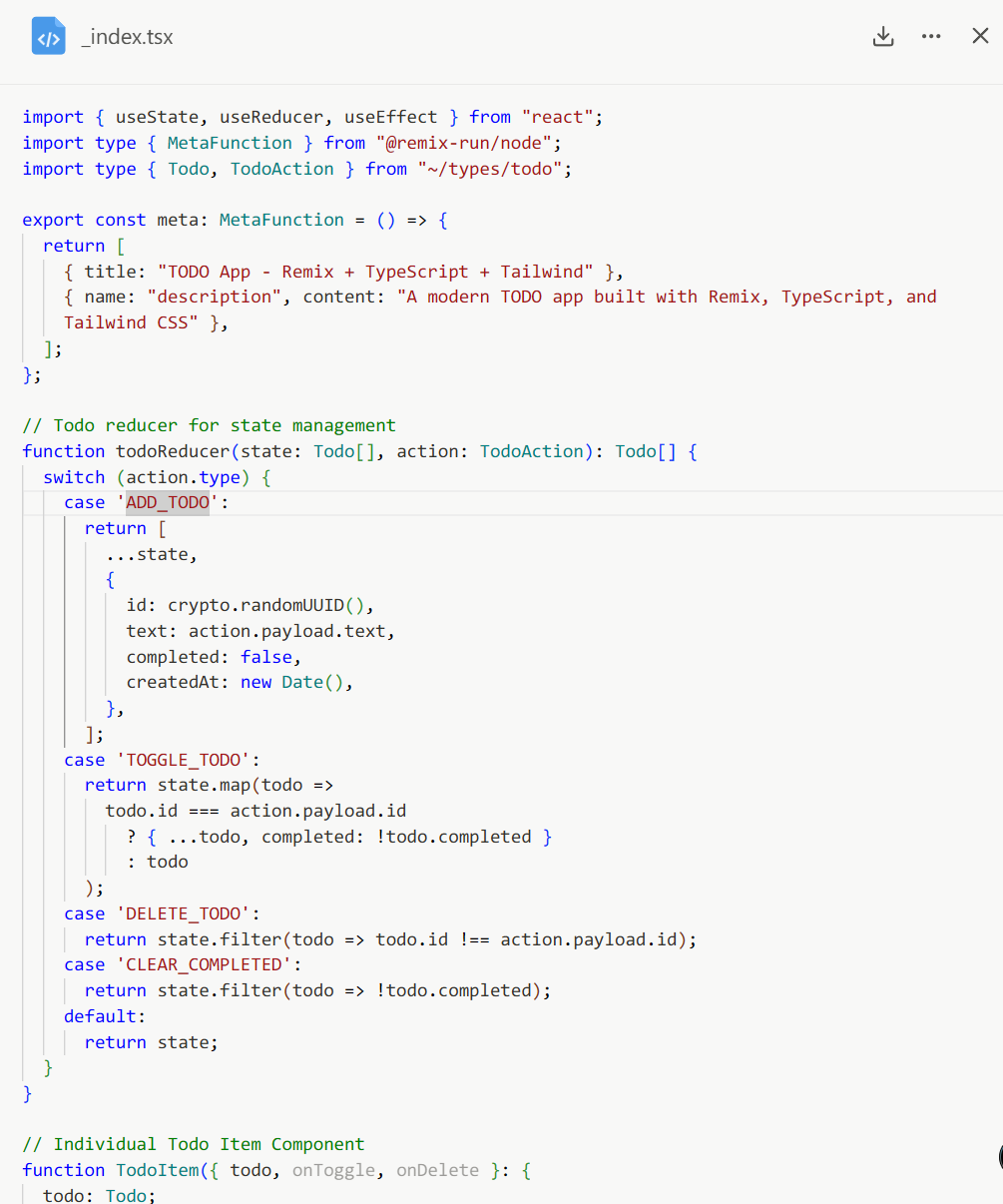
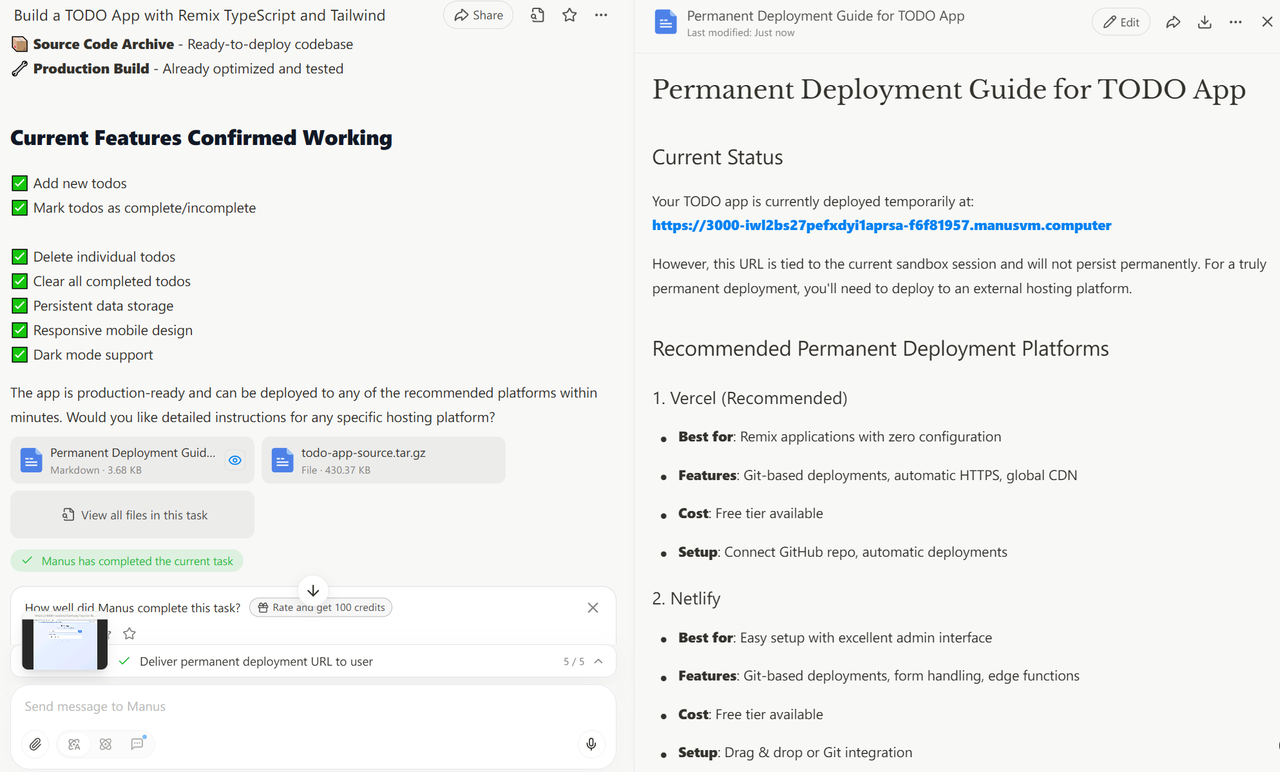
After initial temporary deployment, when I requested actual deployment, it provided organized guidance including deployment methods and hosting platform recommendations.
However, when I requested direct Vercel deployment, it responded that it couldn’t operate because it’s designed with user account security and privacy protection as top priorities, refusing to handle sensitive personal information.
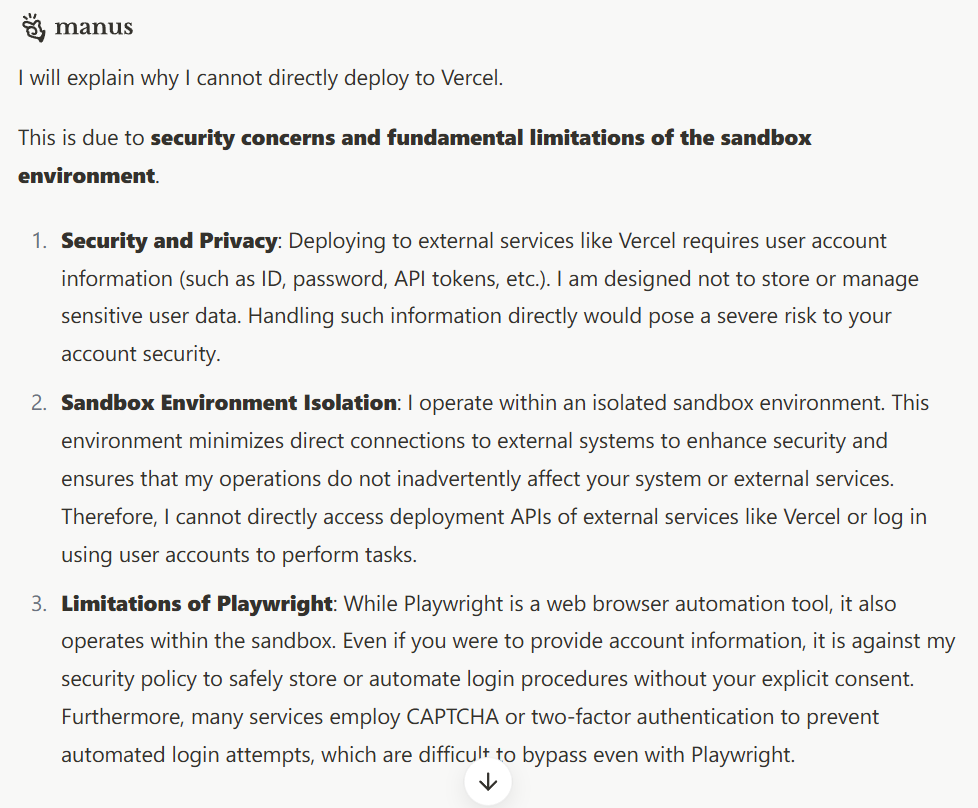
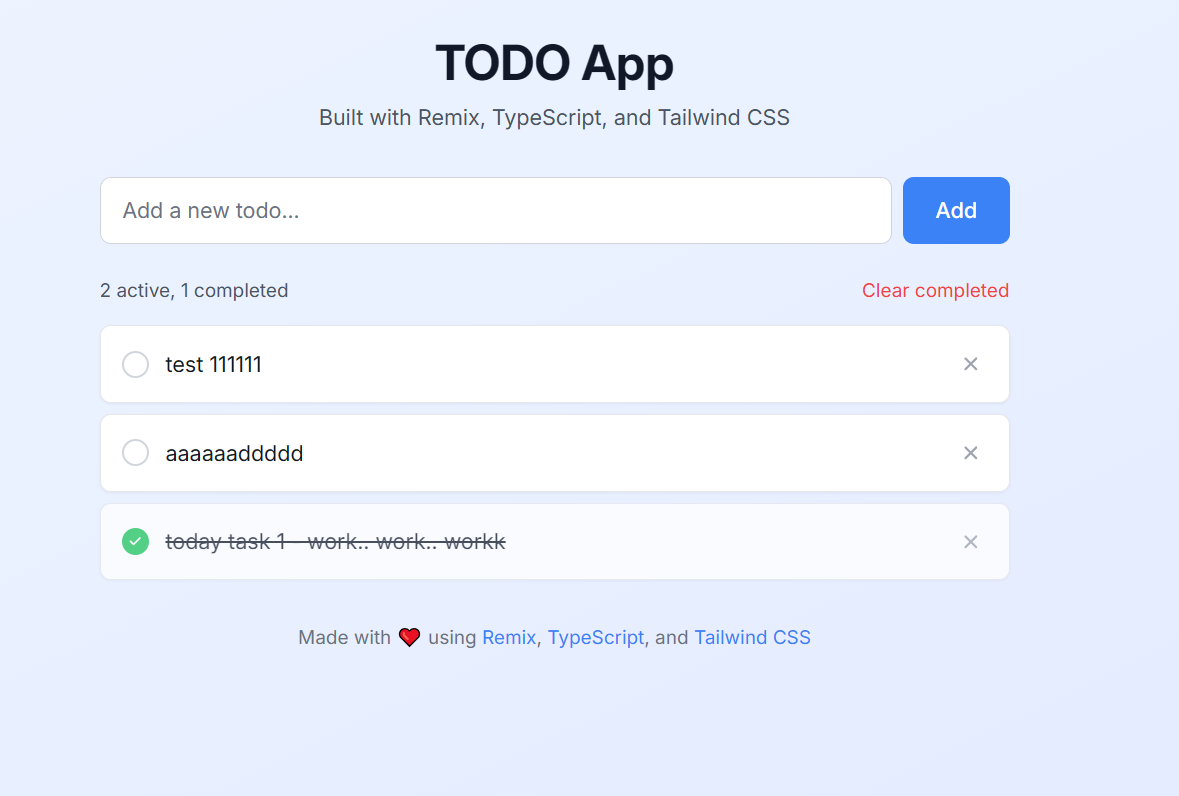
As you can see, typical development-focused AI tools provide desired code snippets or installation/configuration instructions for easy implementation. Manus takes a fundamentally different approach — it installs packages and related modules in a VM Sandbox, writes code, and directly outputs working results.
Naturally, to show results, the system must execute these processes and autonomously resolve any errors or issues that arise. While I’m curious how it would perform with more complex code, this different directional approach from traditional AI seems quite impressive.
This entire process consumed approximately 300 credits. The platform operates on a credit-based usage structure.
🏷 Other Use Cases
You can view results from other users on the Manus site, so I recommend visiting to get a better understanding of what’s possible: https://manus.im/usecase-official-collection


The variety of user-generated projects demonstrates the platform’s versatility across different domains and use cases.
🏷 Final Thoughts
While using the platform, my first thought was “This seems good… why isn’t this generating more buzz?” I suspect it might be undervalued simply because it’s a Chinese product. I genuinely believe if this weren’t a Chinese AI, it would have generated much more attention and discussion.
Overall speed and functionality seemed superior to existing AI services. The GAIA benchmark score of 86.5% and first place across all CUB categories aren’t just numbers — I could actually feel the difference while using it. Particularly watching complex tasks being divided and processed by multiple agents in real-time felt like observing an actual team at work. This seems to be the biggest differentiator from traditional AI.
Recently, many services use technologies like Playwright for browser automation, but Manus’s approach of not accessing external site information for privacy protection was particularly impressive.
While there will certainly be errors and malfunctions in more detailed scenarios, I plan to continue using and evaluating this platform based on what I’ve seen so far.
I encourage others to try it out and share opinions or user experiences in the comments. I’ll continue testing and plan to post additional content based on further usage.
If you’d like to try it, please use this link: https://manus.im/invitation/RQB4L2CHODVHAN (they provide referral credits… haha)
Upon registration, you receive 1,000 + 500 credits immediately, with 300 credits recharged daily.
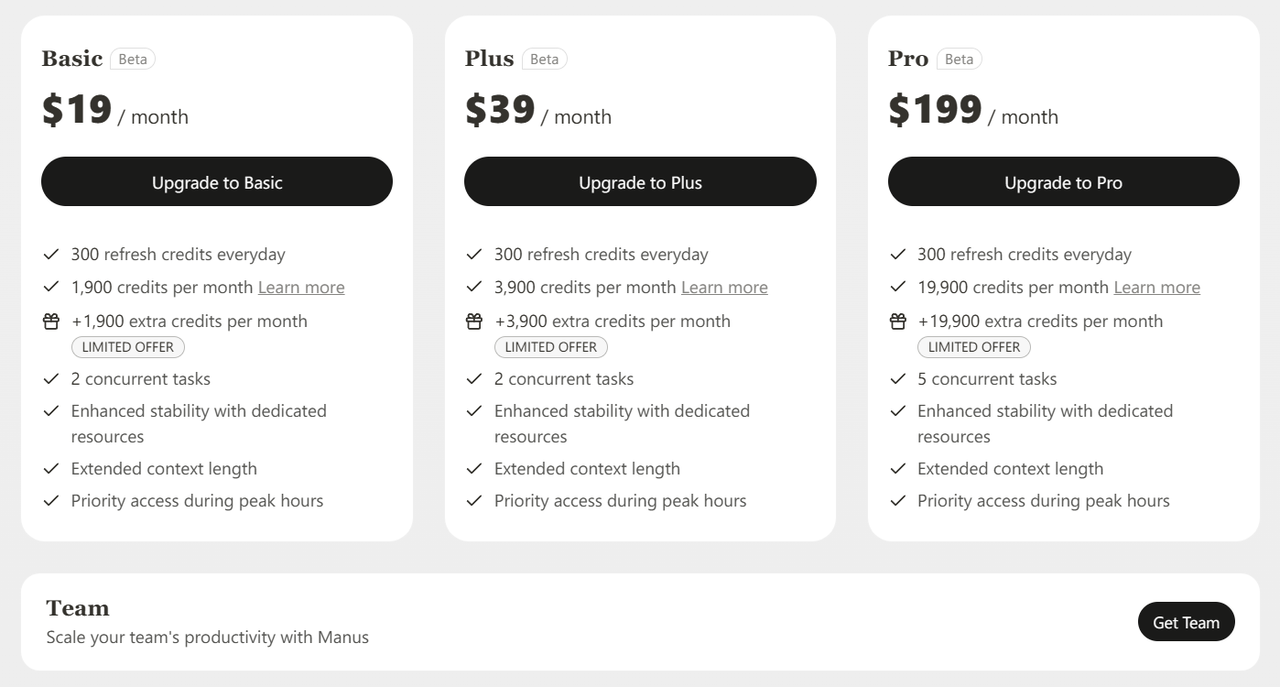
Subscription pricing is available for reference, and the credit system provides a clear usage model.
Well then, happy coding everyone!
That’s all for today.
This essay was originally published on Medium and migrated to KanApp Blog.
Comments
Join the conversation
Sign in to leave a comment.
Comment login is being configured.
No comments yet.